Turbine blades are exposed to extreme thermal and physical loads: A turbine blade at full load can reach speeds of up to 500 m/s. This corresponds to a centripetal acceleration of 160,000 m/s2 with centrifugal forces of around 550 tonnes.
Only difficult-to-cut materials such as Inconel or similar high-temperature alloys are capable of withstanding such forces. Complex blade profiles are an additional challenge. Our consistent tool solutions ensure that your tool change and chip-to-chip times can be reduced to a minimum while still maintaining extremely high quality
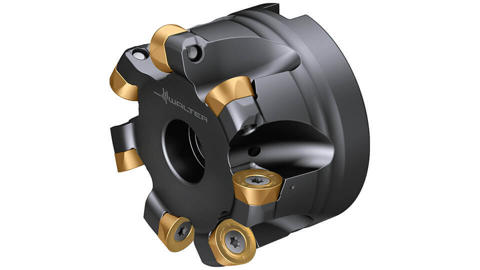
Roughing the blade root, turbine blade and blade head
Solution: F2334R round insert milling cutter
► Optimised insert seat design ► Reinforced tool adaptor ► Direct coolant supply to the cutting edge ► Four cutting edges per indexable insert ► Insert sizes: RO.X 10T3.. or RO.X.1204..
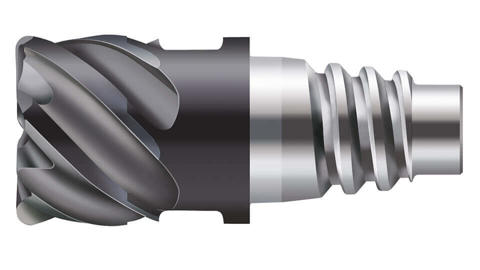
Finishing the turbine blade
Solution: Prototyp Protostar N50 multi-flute
► Modular milling system thanks to the ConeFit adaptor ► 50° helix angle for a soft cutting action ► TAX coating for high feed rates and cutting speeds
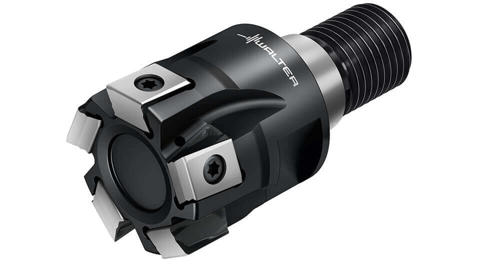
Semi-finishing and finishing of thin-walled, forged blades
Solution: Walter BLAXX F5041/5141
► Tangential indexable inserts with four cutting edges at a 90° angle ► Special surface treatment of the body for a high level of wear resistance ► Real high-performance cutting (HPC) for blade machining ► Semi-finish machining with large depths of cut (up to 9 mm) while also ensuring high feed rates ► Powered by Tiger·tec® Silver
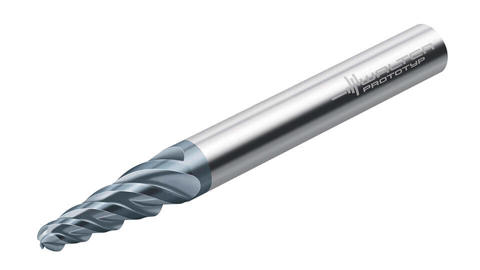
Finishing the transition radius and platform
Solution: Walter Prototyp conical ball-nose copy milling cutters
► Variable inclination angle: From 1° up to max. 30° ► Two to four teeth – with or without chip breaker/knurled profile ► Radius of 0.5–8 mm ► Substrate, geometry, pre-treatment and coating are ideally matched to the application and material ► Reduced delivery time with Walter Xpress